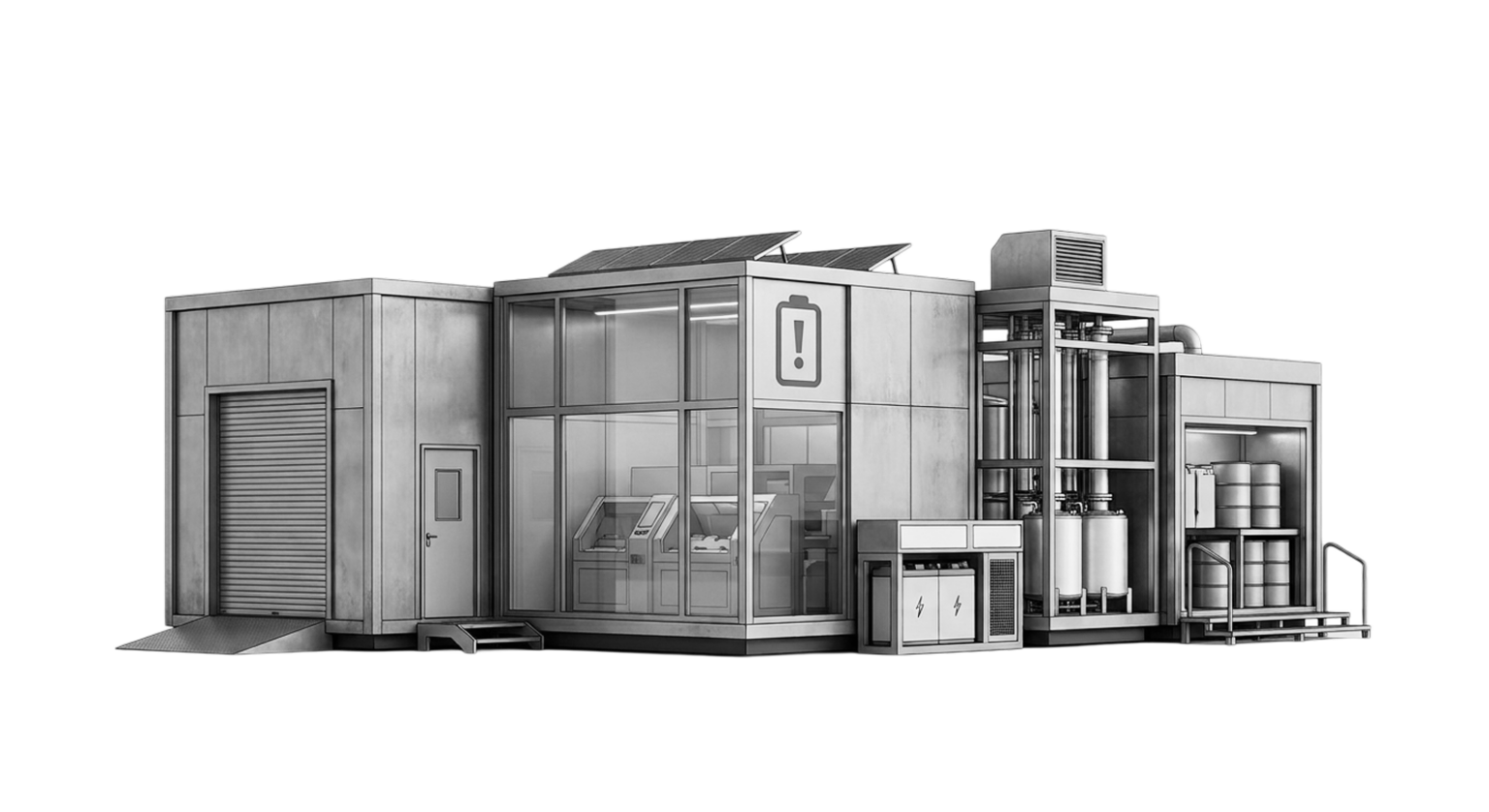
RePyro develops decentralized and modular high-temperature recycling solutions designed to recover critical raw materials from heterogeneous battery waste;
bringing flexible and scalable processing capacity closer to where the waste is generated.
RePyro was created to rethink how battery waste is processed. By combining advanced thermodynamic and kinetic control, with a decentralized approach, valuable materials can be efficiently recovered from mixed battery waste streams,
strengthening local supply chains and enabling a more circular battery economy.
Our foundation is built on technical research and process development,
with the ambition to make battery recycling
more flexible, efficient and resilient.
The challenge
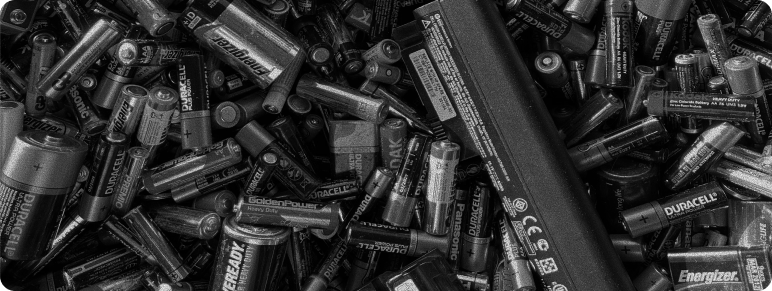
As battery waste shifts from production scrap to end-of-life batteries, recycling streams are becoming more complex, increasing the need for technologies that can handle greater feedstock variability. At the same time, installed capacity is outpacing actual return volumes, leaving large centralized plants exposed to underutilization.
Increasing feed complexity
Recycling volumes are shifting from uniform production scrap to heterogeneous end-of-life batteries with varying chemistries, formats, conditions and impurity profiles.
Capacity volume mismatch
Recycling capacity is growing faster than available return volumes, exposing large centralized plants to underutilization.
Distributed return streams
End-of-life batteries arise across many locations and in uneven volumes, increasing logistics effort and the need for locally scalable capacity.
Our solution
By integrating RePyros “micro pyro unit” as an intermediate pyro step into pre-treatment, heterogeneous battery waste with complex impurity profiles converts into standardized intermediates, enabling more selective recovery and significantly more efficient downstream hydrometallurgy.
Feedstock upgrading
Transforms complex battery inputs into defined intermediate material streams.
Impurity management
Removes or concentrates challenging impurities before downstream refining.
Process-chain efficiency
Reduces complexity between pre-treatment and refining, improving overall material recovery and process integration.
Low-CAPEX deployment
Compact modular units reduce upfront investment and allow recycling capacity to grow with actual return volumes.